Tongji University and Aramco jointly release Whitepaper on Advanced Building Materials for China's Dual-Carbon Goals
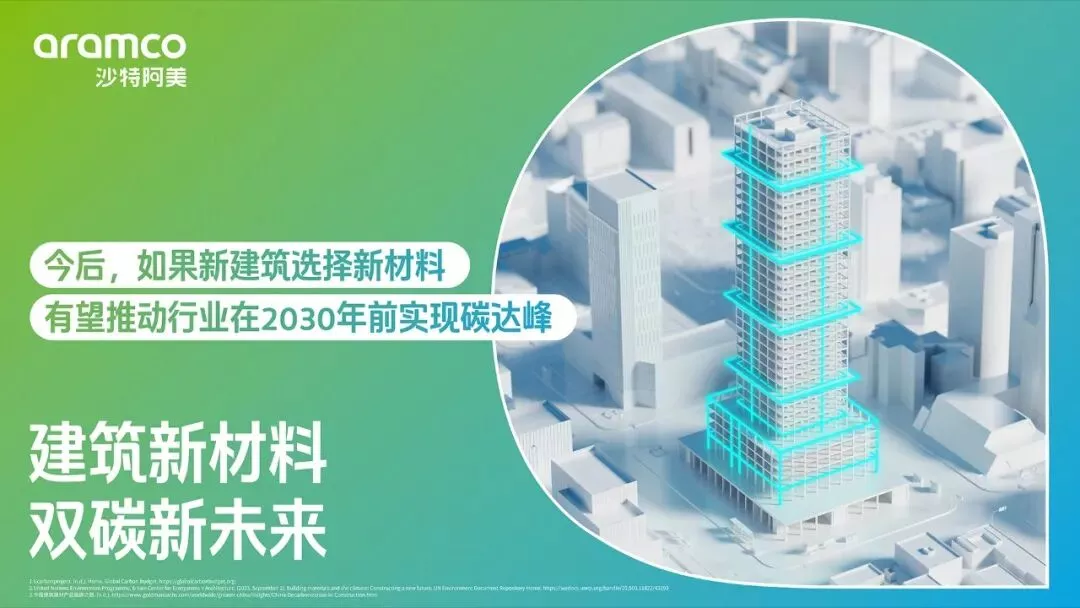
- Focusing on nonmetallic and advanced materials innovation, exploring new pathways for lower-carbon transition across the lifecycle of buildings and infrastructure.
On September 1st at the 2026 China International Composite Expo, Tongji University's College of Civil Engineering released a new whitepaper, Advanced Materials Transition for the China’s Dual-Carbon Goals. The paper systematically examines the application potential of nonmetallic and advanced materials in the building and infrastructure sector, and their scalable pathways to support China's dual-carbon goals.
Click here to download the whitepaper and explore practical advanced materials applications.
The United Nations Environment Programme (UNEP) highlights that seizing the opportunities of the materials transition requires strategic, coordinated action across industries—particularly in standards formulation, material innovation, and scaled-up investment.
As a leading integrated energy and chemicals company, Aramco is actively supporting China’s “Dual Carbon” goals through its Non-Metallic Excellence and Innovation Center (NEXCEL). Established in Beijing in 2022, NEXCEL is a joint initiative co-founded by Aramco and the China Building Materials Academy (CBMA), the technology platform under China National Building Material Group (CNBM). As a collaborative platform, NEXCEL focuses on technology deployment, standards and guideline development, professional training, and international exchange, all aimed at accelerating the industrial application of non-metallic solutions in China’s construction and infrastructure sectors.
This white paper draws on global engineering practice data from NEXCEL Non-Metallic Materials Innovation Center, combined with Tongji University’s academic expertise in civil engineering and materials science. It systematically outlines the technical pathways and industrial value of advanced petrochemical-based materials as high-performance industrial solutions.
The research follows a logical framework of “mechanism explanation—effect verification—pathway proposal”:
1. Mechanism of Carbon Reduction: Aligning with China’s shift from “reducing oil to increasing chemicals” since the 13th Five-Year Plan and Saudi Aramco’s “oil-to-chemicals” strategy, this section explains how advanced materials contribute to carbon emission reductions, with a focus on achieving the targets set for the 15th Five-Year Plan.
2. Verification of Feasibility and Value: Through data and cost-benefit analysis from eight benchmark projects covering diverse scenarios, we validate the feasibility, economic viability, and environmental and dual-carbon benefits of these technologies.
3. Actionable Industry Pathways: Based on engineering practices, we propose actionable pathways for industrial collaboration to inform industry decision-making.
All data presented in this white paper are sourced from publicly available engineering reports, authoritative publications, and NEXCEL project evaluation materials.
As lower-carbon buildings continue to develop, the room for emissions reduction during the operational phase is gradually narrowing. Embodied carbon emissions, durability and whole-life cost during the production and use of building materials are becoming key issues for the next phase of industry transition.
Advanced Materials are becoming the critical link connecting energy and industrial upgrades.
From new energy equipment and high-end manufacturing to transportation and digital infrastructure, the performance, efficiency and sustainability of materials directly determine the competitiveness and development space of industries. Based on this, Aramco has identified advanced materials as a key strategic transition direction to unlock broader long-term value beyond energy. Highlighting advanced materials like fiber-reinforced polymer (FRP) composites, ultra-high-performance concrete (UHPC) and carbon fiber-reinforced polymer (CFRP) composites, the paper points out that their lightweight, high-strength, corrosion-resistant and long-service-life properties can reduce structural weight and maintenance needs while further lowering infrastructure lifecycle carbon emissions and costs. This is because buildings do not exist in ideal environments but are exposed long-term to complex conditions such as earthquakes, sandstorms, salt spray and heat and humidity.
In coastal areas, high-salt and high-humidity environments often mean higher maintenance frequencies and higher long-term costs. More corrosion-resistant and stable advanced material solutions significantly extend the service life of building structures and key components. This not only lowers maintenance and replacement costs but also reduces additional resource consumption and embodied carbon caused by frequent repairs.
Here, lower-carbon is no longer just a one-time construction goal but a long-term performance spanning decades or even centuries.
In seismic zones, high-performance advanced materials can enable lighter designs while ensuring structural safety to reduce redundant material usage and energy consumption.
The value of advanced materials does not stop at buildings themselves. Transportation infrastructure is also a major source of energy consumption and emissions in urban operational systems. Taking advanced transportation systems like maglev trains as an example, the demand for material performance is not only reflected in strength and safety but also directly related to operational efficiency and energy consumption levels.
The application of materials with higher performance and stability can effectively reduce operational resistance and improve system efficiency to continuously cut energy consumption during long-term operations. This "invisible" material optimization often brings "visible" lower-carbon results on a city-wide scale.
Advanced materials are becoming the invisible engine for efficient urban operations.
From materials innovation to large-scale deployment
Accelerating advanced materials from technological innovation to large-scale deployment requires the coordination of research, industry and engineering practice.
In 2022, Aramco co-founded NEXCEL—the Nonmetallic Excellence and Innovation Center—with the China Building Materials Academy (CBMA). The center serves as a joint platform for technology deployment, standards and guidelines development and professional training designed to accelerate the application of nonmetallic solutions across China's building and infrastructure sector.
As the building and construction industry continues to grow, Aramco is committed to enabling innovation and developing sustainable materials in key markets, including China, considering its scale, pace of development, and ambition towards Dual Carbon Goals. Through NEXCEL, we aim to accelerate the development and adoption of lower-carbon building materials by combining Aramco’s leadership in advanced materials and CNBM’s expertise across the full value chain, from materials innovation to large-scale deployment. NEXCEL continues to foster cross-sector collaboration, advance industry standards, and introduce next-generation solutions with measurable impact, including enhanced performance, lower emissions and lifecycle costs.
——Khalid Y. Al Qahtani, Senior Vice President, Engineering Services, Aramco
To date, both parties have supported a total of 72 projects to drive the real-world deployment of advanced materials in communication infrastructure, roads and other scenarios. For example, NEXCEL's work on composite communication towers helps reduce total weight compared with conventional steel towers to illustrate the wider potential for advanced nonmetallic materials in new infrastructure development.
Aramco will continue to draw on its global experience in materials and deepen collaboration with Chinese partners and research institutions to drive the innovation and application of nonmetallic and advanced materials. This will bring enhanced performance, lower emissions and more competitive lifecycle costs to the building and infrastructure industry.Exploring more possibilities for a lower-carbon future through materials innovation.
Panel Discussion on the Materials Transition
In addition to jointly launching the white paper, Aramco Asia participated in a high-level panel discussion featuring representatives from Tongji University, the China Composites Industry Association (CCIA), the NEXCEL Nonmetallic Innovation Center, and the engineering and construction sector. The discussion focused on how advanced nonmetallic materials can help China's buildings and infrastructure achieve lower emissions, greater efficiency, and enhanced lifecycle value. The session was moderated by Wang Shuang, Deputy Director of Strategic Research at the China Petroleum and Chemical Industry Federation.
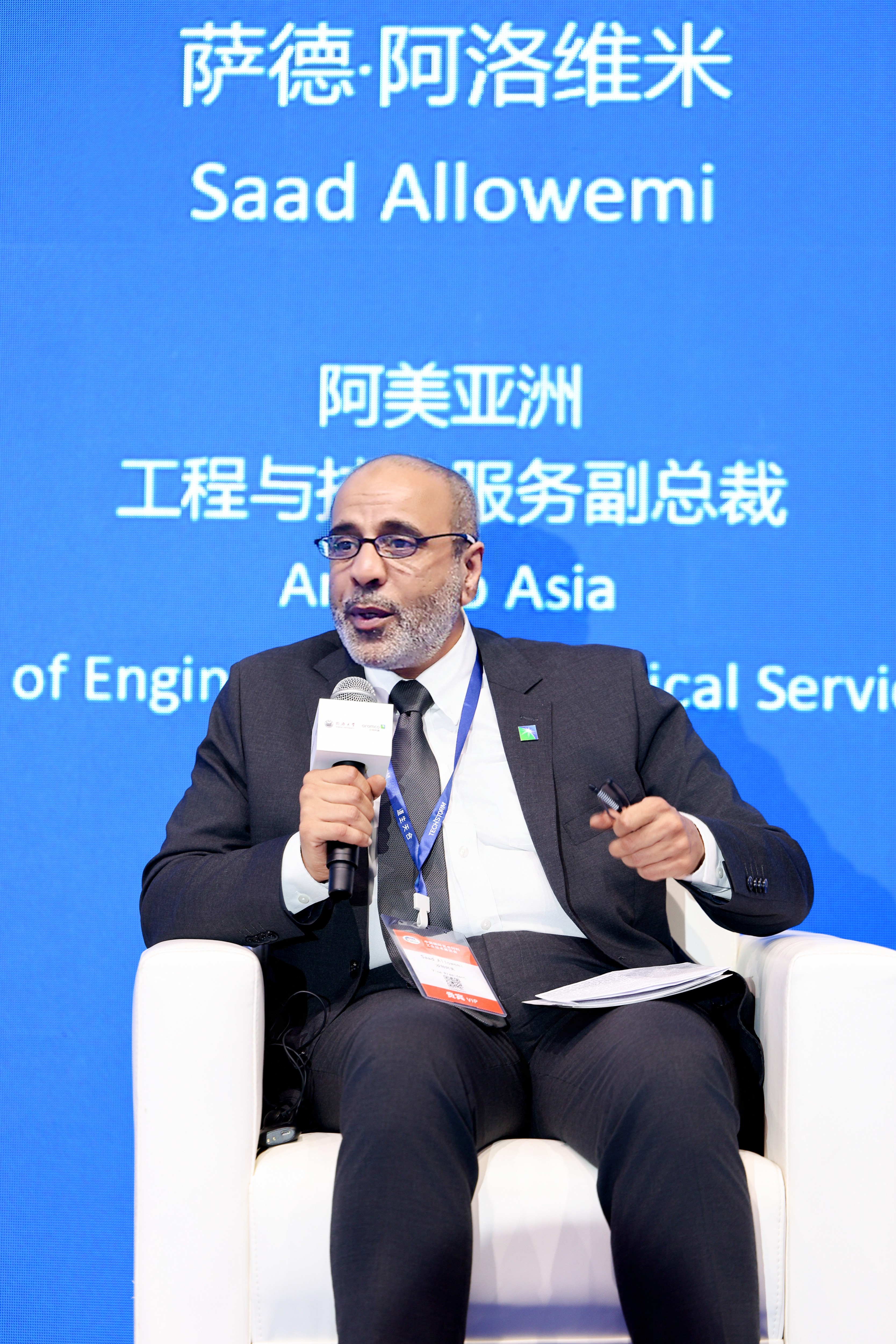
Saad Allowemi, Aramco Asia VP of Engineering & Technical Services, discusses how advanced non-metallic materials can help reduce lifecycle costs and emissions while improving the long-term performance and durability of infrastructure assets.
He highlighted Aramco's ongoing transformation from a traditional energy supplier into an integrated energy and chemicals company, with expanding capabilities in polymers, nonmetallic technologies, and advanced materials. For the buildings and infrastructure sector, he noted, long-term competitiveness will increasingly depend not only on procurement costs but also on durability, maintenance requirements, operational performance, and environmental impact throughout an asset's lifecycle. "
As an industry, we need to move beyond evaluating materials based solely on upfront cost," he said. "What ultimately matters is the value they deliver across the entire lifecycle."
This view emerged as one of the key themes and areas of consensus throughout the discussion. Panelists also explored the conditions required to move advanced materials from demonstration projects to large-scale deployment, offering perspectives from academia, standards development, industry, and end users.
Aramco’s debut at the China Composites Expo showcased Aramco's long-term commitment to advancing material innovation while further strengthening collaboration with Chinese industry, academia, and research institutions. Together, these partnerships are helping explore new pathways for materials innovation to support lower-carbon development.
Latest news
News
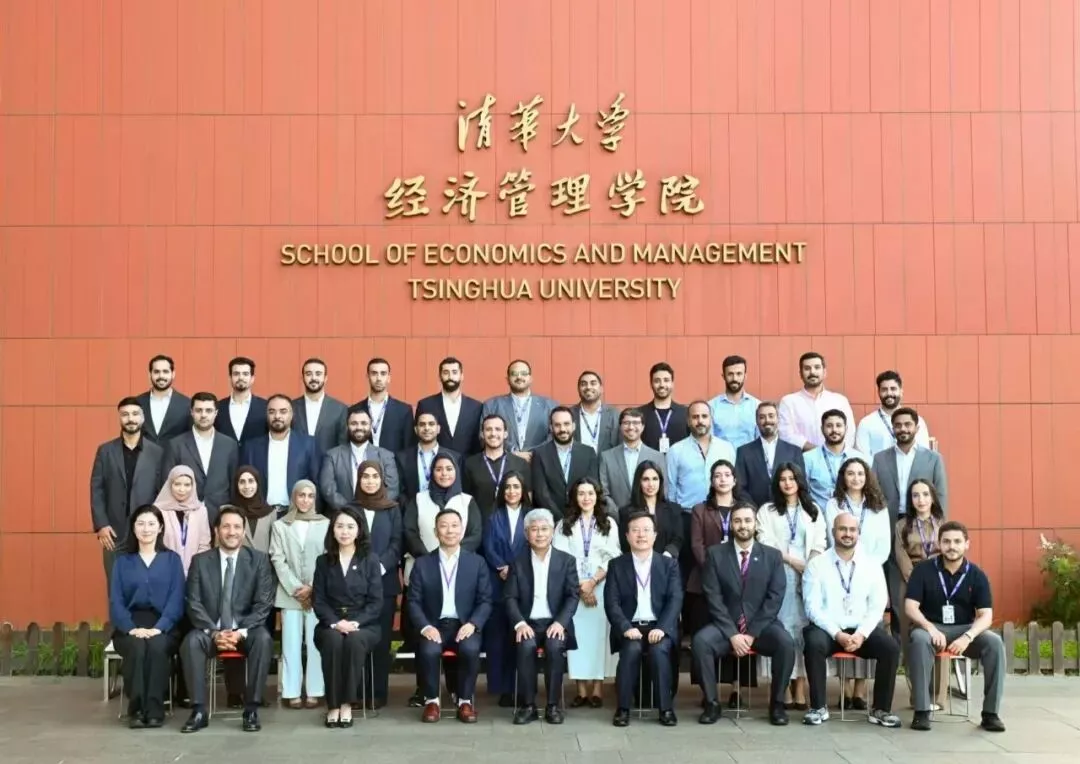
Initiating Global Innovation, Co-building an Industrial Future | Tsinghua Global Industrial Innovation Master's Program officially sets sail
News
Statement Regarding Unauthorized Use of the Aramco Brand
News
Advancing strategic collaboration in AI, robotics and digital transformation
News
Aramco empowers 2026 Yao Foundation Basketball Season, Delivering its 14th revamped court