Interview with Aramco China Managing Director Nader Al-Arfaj: Aramco provides green solutions for carbon reduction across the entire industry chain
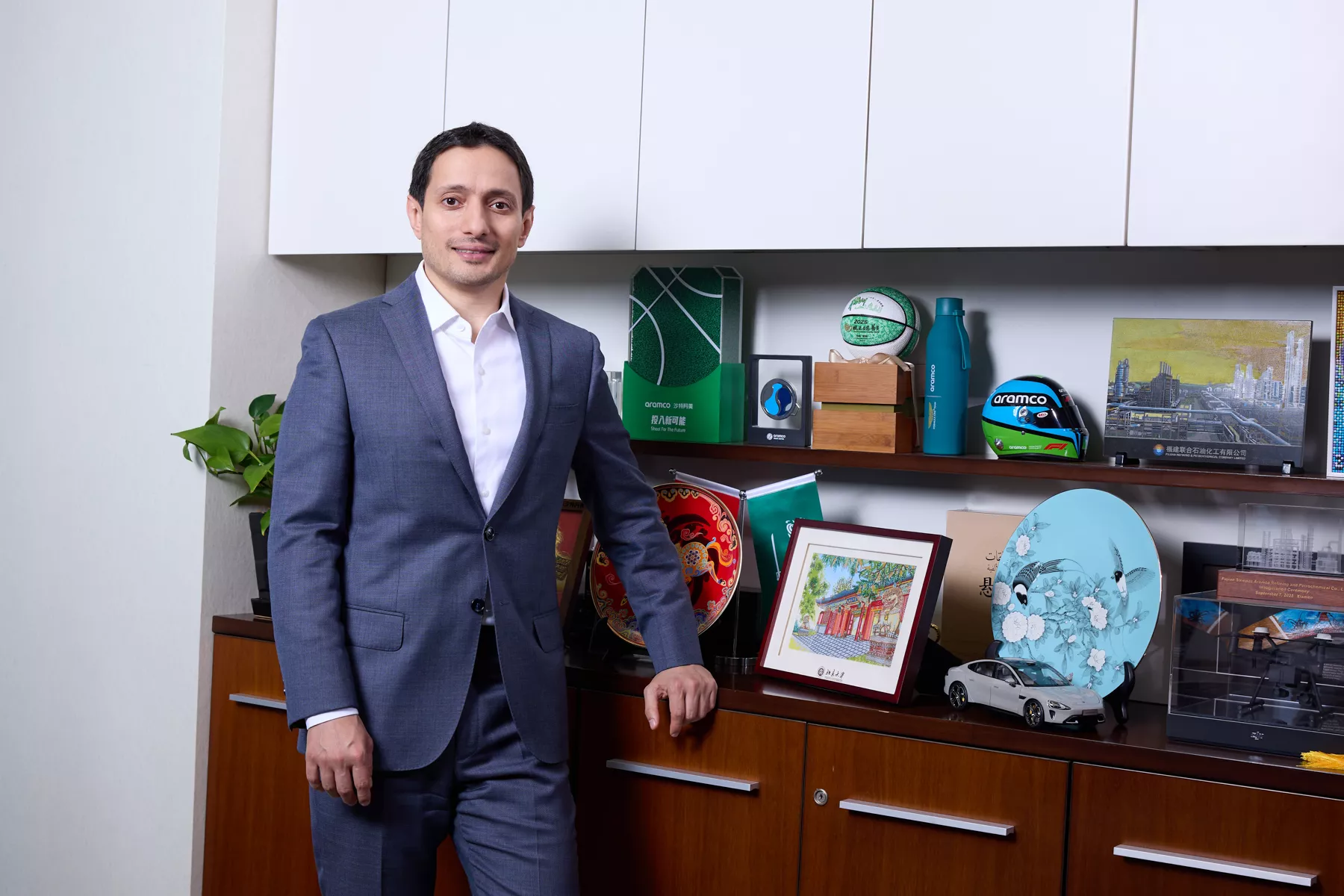
Aramco China Managing Director Nader Al-Arfaj: Chinese companies are among Aramco's most important strategic partners, and we look forward to expanding collaboration across advanced materials and carbon emissions reduction technologies. This reflects shared priorities in industrial upgrading, energy security, and lower-carbon development.
Source: Economic Observer
Reporter: Pan Juntian
Conventional perception holds that oil companies simply sell crude oil, and that any barrels of oil can generate profits if there is demand. But that perception is changing. Crude oil is increasingly being differentiated by its carbon intensity, while the global petrochemical industry is moving steadily toward a lower-carbon future.
In China, according to relevant statistics, the petrochemical and chemical industry accounted for approximately 18% of industrial carbon emissions and around 12% of the country's total emissions in 2022. This year also marks China's nationwide transition from the "dual control of energy consumption" framework to a "dual control of carbon emissions" system. Metrics such as total carbon emissions, reductions in carbon intensity, and declines in energy consumption and carbon emissions per unit of value added in large industrial enterprises have become key policy indicators. As one of the country's largest sources of emissions, the petrochemical industry is facing growing pressure to decarbonize.
Internationally, the European Union's Carbon Border Adjustment Mechanism (CBAM) officially entered its implementation phase in the first quarter of this year. While the measure currently applies to products such as steel and electrolytic aluminum, industry observers expect refining and chemical production activities to be incorporated into its scope by 2030.
Oil companies have been among the first to feel the impact of this low-carbon shift. Between 2015 and 2024, leading international energy companies announced hundreds of billions of dollars in low- carbon investment projects. At the same time, they have committed to achieving net-zero Scope 1 and Scope 2 greenhouse gas emissions.
As one of the world's leading integrated energy and chemicals companies, Aramco has long focused on how to reduce carbon intensity while maintaining energy security and ensuring reliable supply. Against this backdrop, the Economic Observer recently spoke with Aramco China Managing Director Nader Al-Arfaj.
Through sustained efforts to reduce emissions at the source, Aramco has made significant advances in carbon reduction technologies. Al-Arfaj noted that, building on Aramco’s long-term investments in decarbonization and technological innovation, future cooperation between Aramco and Chinese partners will focus on both stable energy supply and deeper industrial and technological integration. The objective, he said, is to ensure safe, efficient, and reliable access to energy and materials while supporting industrial upgrading and economic development.
Reduce emissions at the source
Economic Observer: How does Aramco explain its lower upstream carbon intensity advantage, and how does this align with China's emission reduction goals?
Nader Al-Arfaj: Aramco has one of the lowest upstream carbon intensities in its industry, thanks to decades of disciplined reservoir management, efforts in reducing flaring and methane emissions, and ongoing efficiency improvements across its operations.
This reflects Aramco's long-standing operating philosophy, including precise well placement, advanced reservoir modeling, continued flare-gas recovery efforts, and methane-leak detection. Our long-term ambition is to achieve net-zero Scope 1 and Scope 2 GHG emissions across our wholly owned operated assets by 2050.
Economic Observer: What innovation is the company pursuing in carbon-emissions reduction efforts?
Nader Al-Arfaj: Aramco’s technology program aims to develop new solutions for customers and its Upstream and Downstream businesses, help to diversify its product portfolio, and to grow its business sustainably. This includes growing the business competitively and sustainably in new areas such as digital solutions, new energies, and advanced materials.
This is reinforced by Aramco's crude-to-chemicals technology, which can help reduce carbon emissions by up to 20% to 30% compared with conventional refining and chemical conversion processes. This innovation helps support more efficient pathways to enhance the petrochemical value chain.
Aramco is also investing in technologies and initiatives that include helping improve operational efficiency, developing lower-carbon fuels, and investing in technologies that aim to support future energy systems. Our efforts are focused on mitigating GHG emissions and improving efficiency across our operations, with particular attention to scaling renewables, lowering methane intensity, improving flaring performance, and deploying GHG emission-reduction technologies. This encompasses technologies such as carbon capture and storage.
In collaboration with Siemens Energy, Aramco has launched Saudi Arabia's first direct air capture test unit, which could remove 12 tons of CO2 per year from the atmosphere. Aramco is also collaborating on a carbon mineralization initiative and is developing complementary R&D technologies to accelerate CO2 mineralization.
These initiatives are intended to support Aramco’s broader emissions mitigation ambitions.
Economic Observer: How does this advantage align with China's broader decarbonization agenda?
Nader Al-Arfaj: China has set clear goals to reduce carbon intensity and to strengthen the lower-carbon transformation of its industrial and energy systems, including a target of a 3.8% reduction in carbon dioxide emissions per unit of GDP this year, alongside a sustained push for lower-carbon growth through 2030.
Aramco's partnerships in China, including integrated refining and petrochemical joint ventures, and cooperation on advanced materials help support China's manufacturing ecosystem. These collaborations support supply chain stability, high-quality development, and long-term competitiveness in global markets.
Economic Observer: How is Aramco positioning itself in the lower carbon industrial value chain, and what role does it aim to play in China's industrial transformation?
Nader Al-Arfaj: Aramco is positioning itself as a long-term strategic partner in China's industrial transformation, building on its role as one of the country's most reliable energy suppliers.
Over the past decade, Aramco has evolved from a trusted crude supplier into a strategic partner across China's downstream value chain, with a focus on lower-carbon development, industrial upgrading, and technology-driven transformation.
For example, Aramco’s crude-to-chemicals technology could help reduce emissions by 20% to 30% compared with conventional methods. These efforts complement the lower-carbon ambitions of China's petrochemical supply chains.
Aramco is also deepening its presence through strategic investment in large-scale integrated refining and petrochemical projects along China's east and southeast coast. This investment is closely aligned with China's pursuit of high-quality development.
Aramco has also established NEXCEL in Beijing with the China Building Materials Academy to support the development of advanced materials for use in building and construction sectors.
For example, in Suqian, Jiangsu, NEXCEL paved the world's first recycled plastic-modified asphalt road, reducing construction costs by 19% and carbon emissions by 36% compared to conventional asphalt construction. Aramco has also launched the "Shoot for the Future" court revamp project with the Yao Foundation, which will build or renovate more than 60 community basketball courts over three years.
From crude oil to new materials
Economic Observer: In the context of balancing energy security and the energy transition, how can Aramco support China in building a multi-energy system?
Nader Al-Arfaj: Aramco can support China in building a multi-energy system by combining reliable energy supply and long-term industrial partnership. We expect oil and gas to continue playing an important role in China's growth, even as the broader energy and industrial system evolves.
China's energy and industrial landscape is shifting, with oil demand expected to move gradually from light transport toward petrochemicals, driven by demand for plastics, synthetic fibers, and other advanced materials essential to strategic industries.
China is already the world's largest producer and consumer of petrochemicals, accounting for nearly half of global demand, which aligns closely with Aramco's petrochemical growth strategy. Aramco’s long-term aim is to convert up to four million barrels of oil per day into high-value chemicals. This reinforces its role in supporting China's industrial upgrading.
China is also one of Aramco's most important investment destinations. Through major downstream investments in Fujian, Liaoning, and Zhejiang, Aramco supports energy security while continuing to explore further opportunities in energy, chemicals, technology, innovation, and lower-carbon technologies.
In our view, the future of Aramco-China cooperation will be shaped by reliable energy supply and deeper industrial and technological integration. Together, these can help meet China's growing energy and materials demand in a secure, efficient, and reliable way, while supporting industrial upgrading and development.
Economic Observer: What is the current progress of Aramco's integrated refining and petrochemical projects in China?
Nader Al-Arfaj: Aramco's integrated refining and petrochemical projects in China are progressing steadily and reflect the Company’s efforts towards supporting China's high-quality industrial development.
In Fujian, the Fujian Refining and Petrochemical Company has expanded refinery capacity from 80,000 to 280,000 barrels per day and now operates major petrochemical units alongside world-class digital plant systems. Complementing this, Sinopec SenMei has become Fujian's largest refined-products retailer, operating more than 900 service stations and 14 distribution terminals across the province.
In Liaoning, construction of the Huajin Aramco Petrochemical Company complex is well underway. The project integrates a 300,000-barrel-per-day refinery, a 1.65 million-ton-per-year ethylene unit, and a 2 million-ton-per-year paraxylene unit, with Aramco supplying up to 210,000 barrels per day of crude.
In Gulei Industrial Park in Fujian, Aramco, Sinopec, and Fujian Petrochemical Company Limited have launched a joint venture to build another large integrated complex, with operations targeted around 2030.
Aramco also acquired a 10% interest in Rongsheng Petrochemical in 2023, expanding its downstream presence in China and including the supply of 480,000 barrels per day of Arabian crude to Zhejiang Petroleum and Chemical Co. Ltd.
Aramco and Rongsheng are also exploring potential mutual equity investments in downstream assets, including possible stakes in SASREF and Ningbo Zhongjin Petrochemical.
Economic Observer: Is Aramco considering deeper cooperation with Chinese companies or institutions in areas such as advanced materials, and carbon emissions reduction efforts?
Nader Al-Arfaj: Chinese companies are among Aramco's most important strategic partners, and we look forward to expanding collaboration across advanced materials and carbon emissions reduction technologies. This reflects shared priorities in industrial upgrading, energy security, and lower-carbon development.
Aramco continues to support downstream integration and liquids-to-chemicals pathways with leading Chinese partners to help improve efficiency, reduce lifecycle emissions, and support industrial upgrading.
Advanced materials are another key area. Aramco has signed a five-year cooperation framework agreement with China National Building Material Group to explore joint opportunities in advanced materials and industrial development, including potential work on wind turbine blades, hydrogen storage tanks, lower-carbon building materials, and energy storage solutions.
This builds on the Nonmetallic Excellence and Innovation Center in Beijing, established with China Building Materials Academy to support innovation in advanced materials for the building and construction sectors.
Together with Baosteel and PIF, Aramco is also establishing an integrated steel plate manufacturing complex in Saudi Arabia that could potentially reduce CO2 emissions from the steel-making process by up to 60% compared to a traditional blast furnace — and possibly up to 90% in the future.
Combining Aramco's technical expertise with China's industrial scale, research capacity, and deployment potential can potentially help reduce emissions in hard-to-abate sectors while maintaining energy security and economic competitiveness.
Overall, Aramco's approach in China remains anchored in long-term partnership, joint innovation, and shared value creation. The Company continues to expand cooperation in ways that support China's development priorities, support lower-carbon technologies, and contribute to practical pathways toward a more realistic and inclusive energy future.
Latest news

News
Aramco highlights deepening cooperation in Liaoning at 7th China Liaoning International Fair for Investment and Trade
News
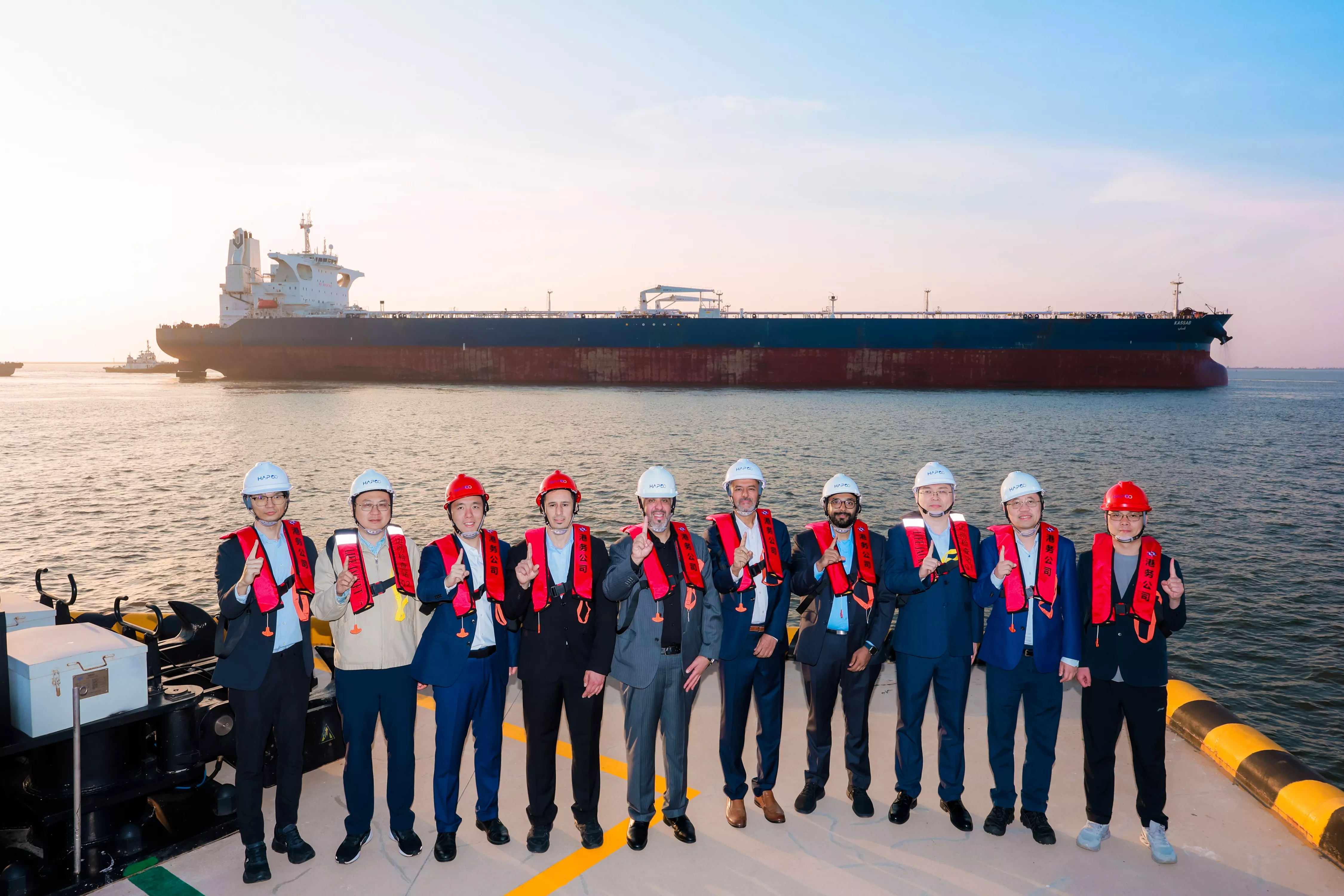
North Huajin, Panjin Xincheng, and Aramco announce first Arabian crude oil shipment to HAPCO
News
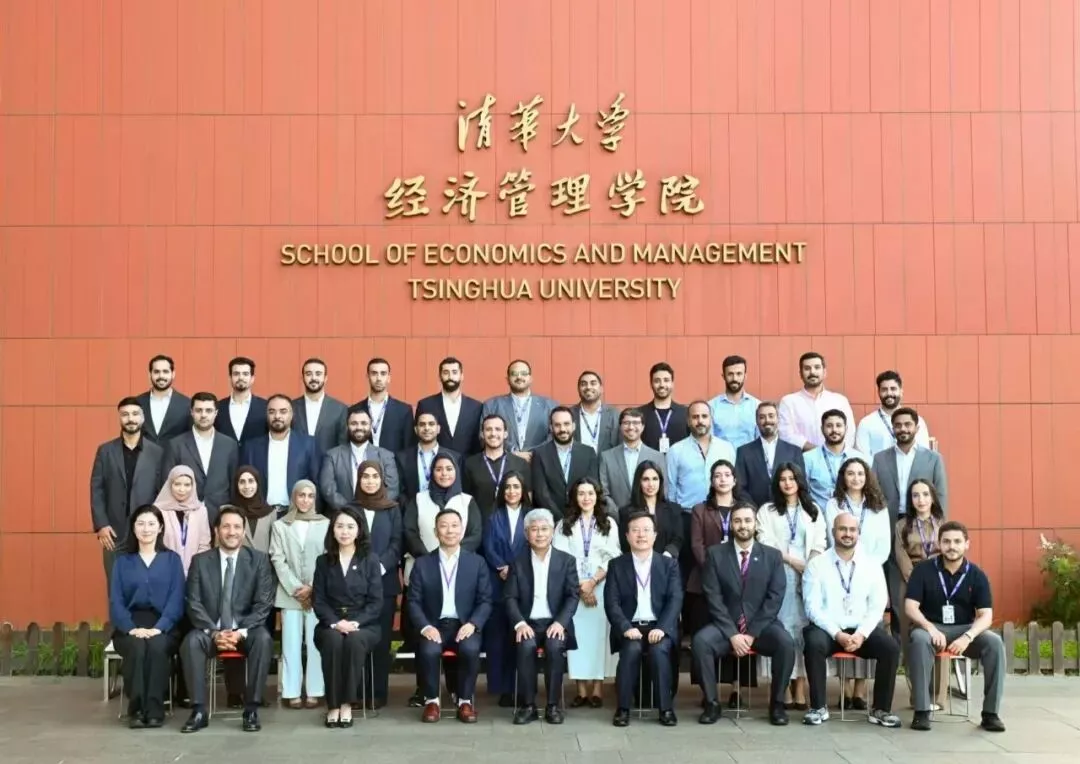
Initiating Global Innovation, Co-building an Industrial Future | Tsinghua Global Industrial Innovation Master's Program officially sets sail
News
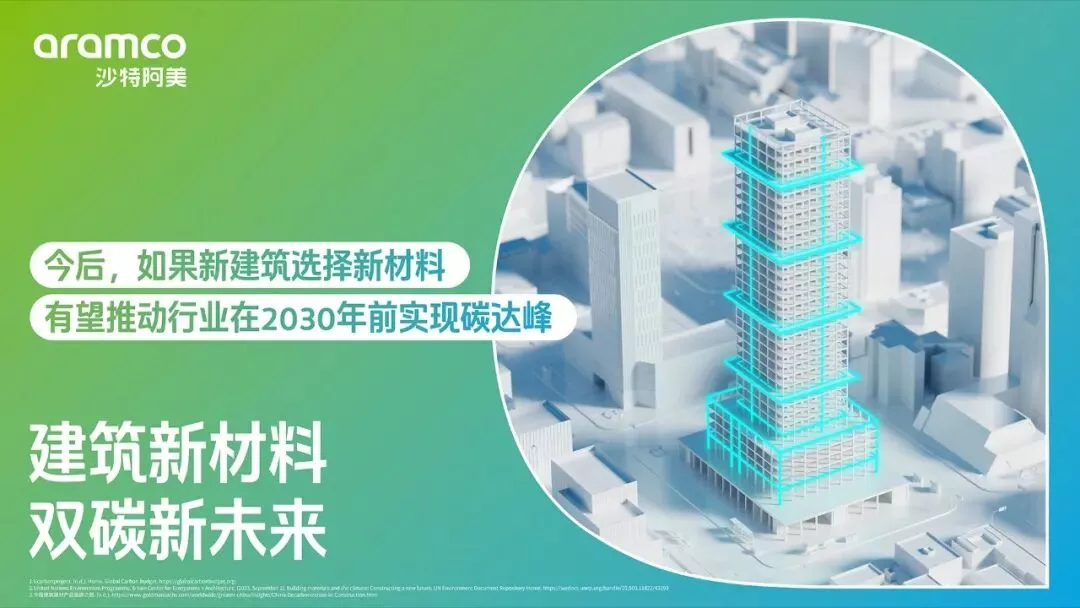
Tongji University and Aramco jointly release Whitepaper on Advanced Building Materials for China's Dual-Carbon Goals